A certified true copy is a photocopy or duplicate of an original document that an authorized person — such as a notary public, government official, or in some cases the original issuing authority — has formally confirmed is a genuine, unaltered match of the original. It carries a signature, stamp, or seal certifying that comparison, which is what allows it to stand in for the original document in situations where handing over the original isn’t practical or allowed.
If an employer, university, bank, or government department has asked you for a “certified true copy” of your degree, passport, or company documents and you’re not sure exactly what that means — or whether it’s the same as attestation — this guide covers the definition, when you need one, how to get one, and why it’s usually only the first step in a longer process.
What Is a Certified True Copy?
A certified true copy is created when someone with the legal authority to do so — most commonly a notary public, a solicitor, a government registrar, or the institution that issued the original document — physically compares a photocopy against the original and endorses the copy as an exact, unaltered reproduction. That endorsement typically includes:
- A statement such as “Certified to be a true copy of the original” or “True copy certified.”
- The certifier’s signature, official stamp or seal, and the date of certification.
- In many cases, the certifier’s name, title, and registration or license number.
Once certified, the copy is treated as a reliable stand-in for the original for most administrative and verification purposes — though, as covered below, it isn’t automatically accepted internationally on its own.
Certified True Copy vs. the Original Document
A certified true copy is not a replacement for the original document, and it doesn’t give the copy any legal status the original didn’t already have. What it does is let you satisfy a document requirement without physically surrendering or risking loss of the original — which matters when you need the same original document (a degree certificate or passport, for example) for multiple applications at once. The certification simply tells the person relying on the copy: “this matches the original, and someone with the authority to check that has verified it.”
When Do You Need a Certified True Copy?
Certified true copies are commonly requested for:
- Visa and immigration applications, where authorities want proof of a document’s contents without requiring the original.
- University or professional licensing applications, particularly when the original degree certificate or transcript needs to stay with the issuing institution or be used elsewhere at the same time.
- Banking, company formation, and legal proceedings, where a certified copy of a passport, trade license, or corporate document is accepted in place of the original.
- Employment applications abroad, where a foreign employer requests verified copies of qualifications or identity documents ahead of a formal offer.
- Court and government filings, where submitting original documents isn’t practical or permitted.
If in doubt, check exactly what the requesting party will accept — some ask specifically for a “certified true copy,” while others require the copy to go a step further and be attested (more on that below).
How Do You Get a Document Certified as a True Copy?
The process is straightforward but does need to go through the right channel:
- Bring the original document and a photocopy of it to an authorized certifier — in the UAE, this is typically a notary public, though some document types (such as academic certificates) may need to be certified by the issuing institution itself.
- The certifier compares the copy to the original side by side to confirm it’s an exact, complete match.
- The certifier endorses the copy with a signature, stamp or seal, and the certification statement.
- You receive the certified copy back, along with your original — the original is not retained.
Some UAE typing centers and notary public offices offer this as a same-day service for straightforward personal documents.
Does a Certified True Copy Need Attestation Too?
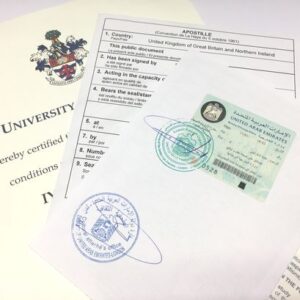
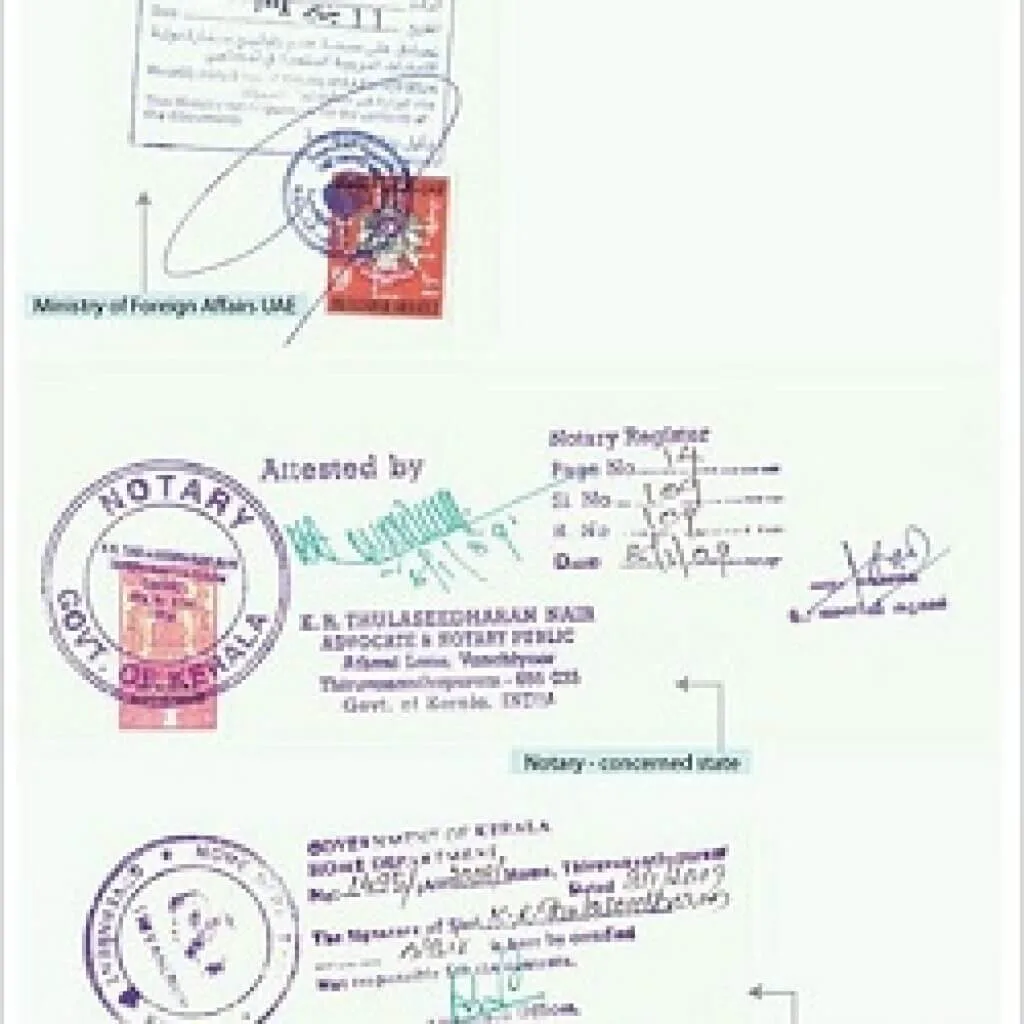
Often, yes — and this is the step people most commonly miss. A certified true copy on its own confirms that the copy matches the original; it doesn’t confirm that the original document, or the notary who certified it, is recognized by a foreign government. If the certified copy is going to be used outside the country where it was certified — for example, submitting a UAE-notarized certified true copy to an authority abroad — it typically needs to go through full attestation: authentication by the home country’s Ministry of Foreign Affairs, legalization by the destination country’s embassy, and, for documents entering the UAE, final attestation by UAE MOFA.
In short: a certified true copy verifies the copy against the original. Attestation verifies the document itself is legitimate and recognized across borders. Many applications require both — a certified true copy that has then been attested — rather than either step alone. For the full breakdown of how that chain works, see our guide: What Is Certificate Attestation? Meaning, Process & Why You Need It.
Frequently Asked Questions
What is a certified true copy?
A certified true copy is a photocopy of an original document that an authorized person — such as a notary public or the issuing institution — has formally confirmed is an exact, unaltered match of the original, endorsed with a signature, stamp, or seal.
Is a certified true copy the same as an attested document?
No. A certified true copy confirms the copy matches the original. Attestation is a separate, broader process that verifies the document itself is genuine and legally recognized in another country. Many applications require a document to be both certified as a true copy and then attested.
Who can certify a document as a true copy in the UAE?
Typically a notary public, though certain document types — such as academic certificates — may need to be certified by the issuing institution rather than a notary.
Do I need to hand over my original document to get a certified true copy?
No. The certifier compares the copy to the original in person and returns the original to you along with the certified copy.
Does a certified true copy expire?
A certified true copy itself doesn’t have a fixed expiry, but many authorities only accept copies certified within a recent timeframe (often three to six months), so it’s best to have the copy certified close to when you’ll actually submit it.
Why would I need a certified true copy instead of just using the original?
When you need the same original document for more than one application at once, or when a requesting party doesn’t want the risk of handling the original, a certified true copy lets you satisfy the requirement without giving up the original document.
For document-specific guidance, see our Certified True Copy service page or our full Attestation Services overview, or get in touch and we’ll confirm exactly which certification and attestation steps your document needs.
Need a Certified True Copy — or Full Attestation?
Whether you need a straightforward certified true copy, full document attestation, or both, we handle the entire process on your behalf so your documents are accepted the first time, wherever they’re going.