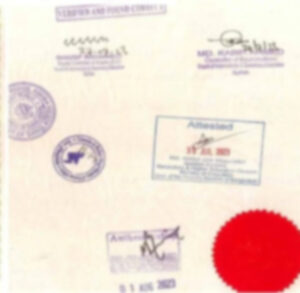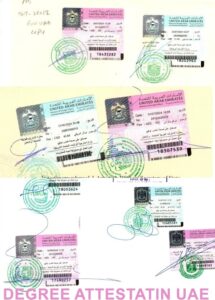
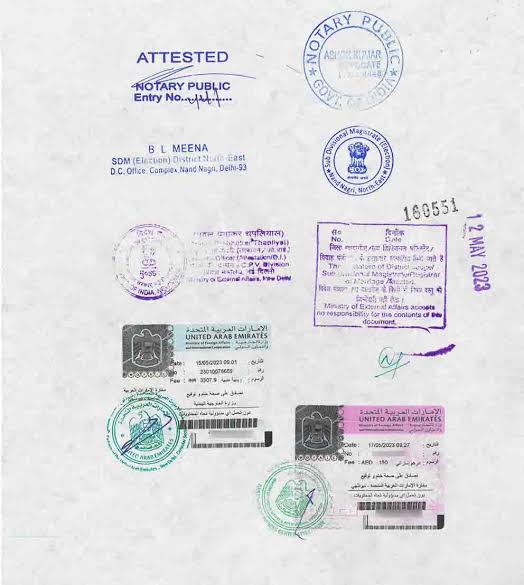
Attesting a degree certificate for the UAE means running it through five stages: verification by the issuing university (and, in some countries, a national education authority), authentication by your home country’s Ministry of Foreign Affairs or apostille body, legalization by the UAE Embassy or Consulate in your home country, shipment to the UAE, and finally attestation by the UAE Ministry of Foreign Affairs and International Cooperation (MOFA). Every stage before the last one has to happen in your home country — the chain can’t be started once you’ve already arrived in the UAE.
If you’ve been told your degree certificate needs to be “attested” before a UAE employer, university, or the immigration authorities will accept it, this guide walks through exactly what that means for an educational document specifically, since degree attestation involves one extra verification step that most personal documents don’t need.
Why Degree Certificates Need an Extra Verification Step
Most personal documents — birth certificates, marriage certificates, police clearance certificates — go straight from notarization into the standard attestation chain. A degree certificate doesn’t, because the first authority in that chain isn’t a notary at all: it’s the institution that issued the degree, and in many countries a national education authority as well.
This exists because a foreign affairs ministry has no way to independently confirm that a university degree is genuine — only the university, or the country’s recognized education authority, can do that. Before your home country’s Ministry of Foreign Affairs will authenticate the document, it needs confirmation, directly from the issuing institution or education authority, that the degree is real. Skipping this step is the single most common reason degree attestation applications get delayed.
How to Attest a Degree Certificate in the UAE: Step-by-Step
Attesting a degree certificate for the UAE runs through five stages. The first three have to happen in the country that issued the degree — attestation can’t be started once you’ve already arrived in the UAE.
- University or education authority verification (home country). The issuing university confirms the degree was genuinely awarded to you — directly through its registrar or exams office, or routed through a national verification body, depending on the country. Some countries require this step to go through a Ministry of Education or equivalent recognized authority before the Ministry of Foreign Affairs will proceed.
- Home country Ministry of Foreign Affairs authentication (or apostille). Once the degree is verified, your home country’s Ministry of Foreign Affairs, or equivalent authentication department, authenticates the signature and seal from the step above. If your country is a member of the 1961 Hague Apostille Convention, this stage is sometimes completed as an apostille instead of a standard MOFA stamp — though as the next section explains, that doesn’t shorten the chain for a UAE-bound document.
- UAE Embassy or Consulate attestation (home country). The UAE’s embassy or consulate in your home country legalizes the document, confirming it recognizes the authentication completed above. This step is mandatory for every degree certificate entering the UAE, regardless of country of origin or apostille status.
- Courier the document to the UAE. Once the embassy has legalized it, the original degree certificate — along with any accompanying transcripts — needs to be sent to the UAE, either to you directly or to an authorized representative, so the final stage can be completed.
- UAE Ministry of Foreign Affairs (MOFA) attestation. The final step happens inside the UAE. MOFA verifies the embassy legalization and issues the UAE’s own attestation — what UAE employers, universities, and government departments actually check for. This is usually the fastest link in the chain once the document has arrived, often completed within a few working days through the MOFA UAE app.
After MOFA attestation, your degree certificate is fully attested and ready to submit for your visa, employment, or university application. If the certificate isn’t in English or Arabic, you may also need a certified translation before it’s accepted — our legal translation services team can advise on which documents require this.
Does an Apostille Replace Any of These Steps?
Not fully, and this is where a lot of applicants lose time. The UAE is not a member of the Hague Apostille Convention, so an apostille on its own is never accepted as a substitute for full attestation. Even if your home country issues an apostille at the authentication stage, it only satisfies that one stage — you still need UAE Embassy legalization and UAE MOFA attestation afterward, even for documents from apostille-member countries. Our apostille services team can confirm exactly which of your documents can start with an apostille and which stages still have to follow it.
Documents You'll Typically Need
Requirements vary by country of issuance, but most applicants need:
- The original degree certificate (photocopies aren’t accepted for attestation).
- Academic transcripts, if requested by the receiving authority in the UAE.
- A copy of your passport.
- A certified translation, if the certificate isn’t in English or Arabic.
- Depending on your country, a letter or verification form from the issuing university, requested separately from the certificate itself.
It’s worth confirming the exact list for your specific degree and country before you start.
Common Reasons Degree Attestation Gets Rejected or Delayed
- Name mismatches between the degree certificate and your current passport, including after a legal name change.
- Lamination — a laminated degree certificate generally can’t be attested, since authorities need to apply physical stamps to the original.
- Missing transcripts, when the receiving UAE authority specifically requires them alongside the certificate.
- Wrong embassy jurisdiction — using an embassy or consulate that doesn’t cover the region where your degree was issued.
- Expired or superseded stamps, if an earlier stage was completed some time ago and requirements have since changed.
- Incorrect or missing translation, for certificates issued in a language other than English or Arabic.
How Long Does Degree Attestation Take, and What Does It Cost?
Timelines vary significantly by country, since university or education authority verification is the least predictable part of the chain — it can take anywhere from a few days to several weeks depending on the institution and country. The UAE Embassy and UAE MOFA stages are generally the fastest and most predictable once a document reaches them. Because each authority in the chain sets its own fees independently, it’s best to get a specific estimate for your degree, its country of origin, and your intended use in the UAE rather than relying on a general figure.
Frequently Asked Questions
How do I attest my degree certificate for the UAE?
Your degree certificate needs to go through five stages: verification by the issuing university or education authority, authentication by your home country’s Ministry of Foreign Affairs (or an apostille), legalization by the UAE Embassy or Consulate in your home country, shipment to the UAE, and finally attestation by the UAE Ministry of Foreign Affairs (MOFA).
Can I start degree attestation after I've already moved to the UAE?
No. The first three stages — university verification, home country authentication, and UAE Embassy legalization — all have to happen in the country that issued the degree, before the document is sent to the UAE for the final MOFA stage.
Does an apostille replace UAE attestation for a degree certificate?
No. The UAE isn’t a member of the Hague Apostille Convention, so an apostille only ever covers the home-country authentication stage. You still need UAE Embassy legalization and UAE MOFA attestation afterward, even for documents from apostille-member countries.
Can a laminated degree certificate be attested?
Generally, no. Attestation authorities apply physical stamps and endorsements directly to the original document, which usually isn’t possible once it’s been laminated.
Do I need to attest my academic transcripts as well as my degree certificate?
It depends on what the requesting UAE authority (employer, university, or government department) asks for. Some accept the degree certificate alone; others require the transcripts to go through the same chain. Confirm the exact requirement before you start.
How long does the whole process take?
It depends mainly on how quickly the issuing university or home-country education authority completes its verification, since that’s the least predictable stage. The UAE Embassy and UAE MOFA stages are typically the fastest once your document reaches them.
For the fuller picture of how UAE attestation works, see our guide on what certificate attestation means and why you need it, and if your degree is from the UK specifically, our UK certificate attestation guide. You can also see the full process on our Degree Certificate Attestation service page.
Need Help Attesting Your Degree Certificate?
We manage the entire degree attestation chain on your behalf — from liaising with the issuing university, to home-country authentication, to UAE Embassy legalization, to the final UAE MOFA stamp — so your certificate is accepted the first time.