To attest Algerian documents for the UAE or UK, the two routes now look quite different. For the UK, Algeria joined the Hague Apostille Convention in July 2026, so a single Algerian apostille generally replaces the old embassy legalization chain. For the UAE, nothing has changed, because the UAE itself is not a member of that Convention — Algerian documents still need the full chain: authentication inside Algeria, UAE Embassy legalization in Algiers, and a final UAE Ministry of Foreign Affairs (MOFA) attestation once the document reaches the Emirates.
This guide walks through both versions of the process for Algerian-issued certificates — degree and diploma certificates, birth and marriage certificates, and commercial documents — along with the documents to gather first and the mistakes that most often cause delays.
Why Algerian Documents Need Attestation Before They're Accepted Abroad
Attestation (sometimes called legalization) is the chain of official stamps that confirms a document issued in one country is genuine, so an authority in a different country can rely on it. Our guide on what certificate attestation means and why you need it covers the general concept in more depth. For Algerian-issued certificates, UAE immigration, employers, schools, and banks won’t accept a plain original or a locally notarized copy on its own — it has to carry an official Algerian sign-off, and then the UAE’s own, before UAE authorities will treat it as reliable. UK authorities and institutions have a lighter-touch requirement since Algeria’s 2026 Hague accession, but they still need to see the apostille itself.
You’ll typically be asked for attested Algerian documents for:
- UAE employment and residence visas, where degree or diploma certificates support a work permit or job offer.
- Family or spouse visa sponsorship, where a marriage or birth certificate establishes the relationship.
- Business setup or trade dealings, where company and commercial documents need to be recognized in the UAE.
- UK study, work, or settlement applications, where an institution or UK Visas and Immigration asks for an authenticated academic or civil document.
How to Attest Algerian Documents for the UAE: Step by Step
Attesting an Algerian document for UAE use still runs through four stages, unchanged by Algeria’s Hague accession. The first three have to happen in Algeria — the chain can’t be started once you’re already in the UAE — before the document is sent on for the final stage inside the Emirates.
- Notarization or Algerian authority authentication. The document is first verified by a notary public or the relevant issuing authority inside Algeria — for example, a university registrar for academic certificates or the civil registry for birth and marriage certificates. The document must stay in its original, unlaminated form throughout.
- Algerian Ministry of Foreign Affairs authentication. Once notarized, the document is authenticated at the federal level, confirming the notary’s or issuing authority’s signature and seal are genuine. Depending on the document type, an additional verification step by another Algerian ministry — such as Higher Education for degree certificates, or Justice for court-issued documents — may apply before this stage; it’s worth confirming the exact requirement for your specific document.
- UAE Embassy or Consulate legalization in Algiers. The UAE’s mission in Algeria legalizes the document, confirming it recognizes the Algerian Ministry of Foreign Affairs authentication from the step above. This stage is mandatory for every Algerian document entering the UAE, regardless of Algeria’s own Hague Convention status, since the UAE itself sits outside the Convention.
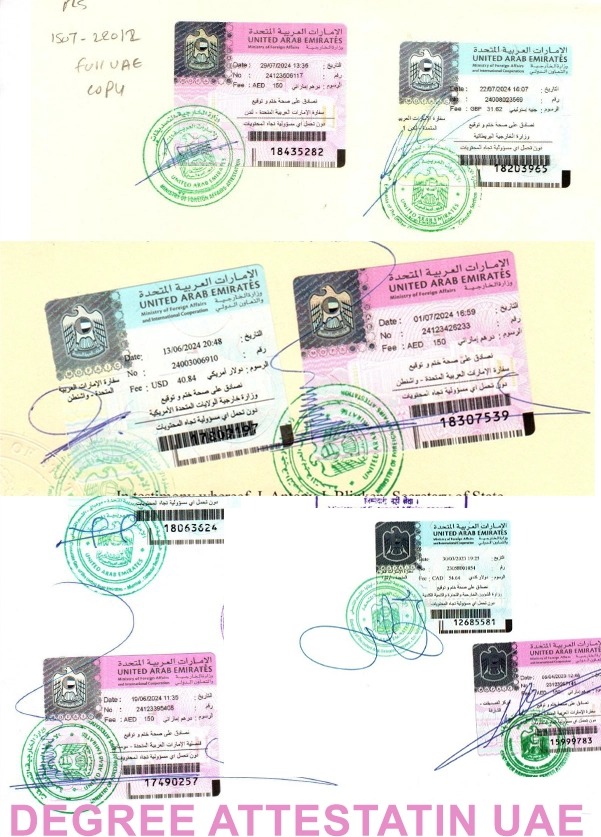
- UAE Ministry of Foreign Affairs and International Cooperation (MOFA) attestation. This last stage happens once the document physically reaches the UAE. MOFA verifies the embassy legalization and applies the UAE’s own attestation stamp — the one that immigration, employers, schools, and banks in the UAE actually check for. This stage is normally completed through the MOFA UAE app or website, with a courier collecting and returning the original document.
For the broader picture of how this fits into UAE attestation in general, see our Attestation Services Around the World overview, or get in touch and our team can review what you have and pick up the chain from wherever your document currently stands.
Does Algeria's New Apostille Status Change Anything for the UAE?
No — and this is the point most likely to cause confusion now that Algeria has joined the Hague Apostille Convention. An apostille only simplifies document exchange between two Convention member countries. The UAE has never joined the 1961 Hague Apostille Convention, so an Algerian apostille on its own is not accepted in place of UAE attestation. Every Algerian document bound for the UAE still needs the full chain described above — Algerian Ministry of Foreign Affairs authentication, UAE Embassy legalization in Algiers, and UAE MOFA attestation — exactly as it did before Algeria’s accession took effect.
Attesting Algerian Documents for the UK: What's Different
The UK route changed significantly in 2026. Algeria deposited its accession to the 1961 Hague Apostille Convention on 5 November 2025, and the Convention entered into force for Algeria on 9 July 2026. Because the UK is also a Convention member and raised no objection to Algeria’s accession, an Algerian document bound for the UK can now generally be apostilled in Algeria and used directly — without the older step of separate legalization at the British Embassy or a UK consular office.
In practice, that means getting the document notarized or authenticated by the relevant Algerian issuing authority, then obtaining the apostille itself, which Algeria now issues through a dedicated national platform alongside physical access points such as tax offices and post offices. Each document needs its own separate apostille application — a stack of certificates can’t be bundled into a single request.
A couple of things are still worth checking case by case: a handful of Hague member states formally objected to Algeria’s accession, which means the Convention doesn’t apply between Algeria and those specific countries (the UK is not one of them, so this doesn’t affect the UK route); and some UK institutions or registries may still prefer to see the underlying Algerian authentication alongside the apostille. Confirm the exact requirement with whoever is requesting the document before relying on the apostille alone.
Which Algerian Documents Typically Need Attestation?
The routes above apply, with only the UK-side simplification changing, across most Algerian document types requested for UAE or UK use:
- Degree, diploma, and transcript certificates — the most common document type in this cluster, usually tied to a job offer or work visa.
- Birth certificates — for family visa sponsorship or school admissions.
- Marriage certificates — for spouse visa sponsorship or dependent visa renewals.
- Company and commercial documents — incorporation certificates, board resolutions, and similar records for business setup or trade dealings in the UAE.
Exact requirements can differ slightly by document type and by the specific authority requesting it, so it’s worth confirming the list for your situation before you start either chain.
Common Reasons Algerian Document Attestation Gets Delayed or Rejected
- Assuming an apostille works for the UAE — it only covers the UK (and other Hague member) route; UAE-bound documents still need the full embassy-and-MOFA chain.
- Submitting a photocopy instead of the original certificate — authorities at every stage need to apply stamps and endorsements directly to the original document.
- Lamination — a laminated certificate generally can’t be attested or apostilled, since physical stamps can’t be applied once a document is sealed in plastic.
- Name mismatches between the certificate and the applicant’s current passport, including after a name change following marriage.
- Wrong embassy or consulate jurisdiction — submitting to a UAE mission that doesn’t cover the region where the document was issued or where the applicant resides.
- Bundling multiple documents into one apostille request — Algeria’s apostille platform requires a separate application for each document.
How Long Does It Take, and What Does It Cost?
Timelines differ sharply between the two routes. The UK-bound apostille route is generally the faster of the two now that it runs through a single Algerian authority rather than a multi-stage chain, though processing speed still depends on how the application is submitted and how busy that office is. The UAE-bound route remains a multi-stage process, and the Algerian authentication stages are typically the least predictable part of it, since they depend on Algerian government processing volumes; the UAE Embassy legalization and UAE MOFA stages are generally more consistent once a document reaches them. Because each authority in either chain sets its own fees independently and these can change, it’s best to get a specific estimate for your certificate, its document type, and your intended use rather than relying on a general figure.
Frequently Asked Questions
How do I attest an Algerian document for the UAE?
The document is first notarized or authenticated by the relevant Algerian issuing authority, then authenticated by Algeria’s Ministry of Foreign Affairs. From there, it needs UAE Embassy or Consulate legalization in Algiers, and finally UAE Ministry of Foreign Affairs (MOFA) attestation once the document reaches the UAE. This chain is unchanged by Algeria joining the Hague Apostille Convention, since the UAE is not a Convention member.
Can I use an Algerian apostille for UAE purposes?
No. An apostille only simplifies document exchange between two Hague Apostille Convention member countries, and the UAE has never joined the Convention. Algerian documents bound for the UAE still need full embassy legalization and UAE MOFA attestation, regardless of Algeria’s own Convention membership.
Has Algeria joining the Hague Apostille Convention changed anything for the UK?
Yes. Algeria’s accession entered into force on 9 July 2026. Since the UK is also a Convention member, an Algerian document can now generally be apostilled in Algeria and used directly in the UK, without the older step of separate legalization at the British Embassy.
Where do I get an apostille for an Algerian document?
Algeria issues apostilles through a dedicated national platform, with physical access also available through tax offices and post offices. Each document needs its own separate application — multiple certificates can’t be combined into a single apostille request.
Can I start the UAE attestation process after I've already moved to the UAE?
No. The Algeria-side steps — notarization or authority authentication, Algerian Ministry of Foreign Affairs authentication, and UAE Embassy legalization — all have to happen in Algeria before the document is sent on for the final UAE MOFA stage.
Can Attest Dubai help if I'm already in the UAE and my documents are still in Algeria?
Yes. We can coordinate the Algeria-side stages through authorized representatives and complete the UAE Embassy and UAE MOFA stages directly, so you don’t need to travel back to Algeria to manage the process yourself.
For the fuller picture of how UAE attestation works end to end, see our guide on what certificate attestation means and why you need it. If you’re attesting a degree certificate alongside other Algerian paperwork for the same visa application, our degree certificate attestation guide walks through that parallel process in more detail. You can also see our apostille services if you’re unsure which route your document needs.
Need Help Attesting Your Algerian Documents?
We coordinate the entire chain on your behalf — whether that’s an Algerian apostille for the UK or full embassy legalization and UAE MOFA attestation for the Emirates — so your certificate is accepted the first time, whether it’s for a visa, a job offer, or a school admission.