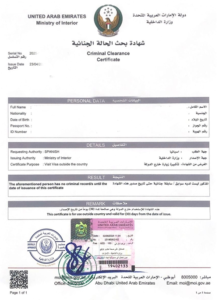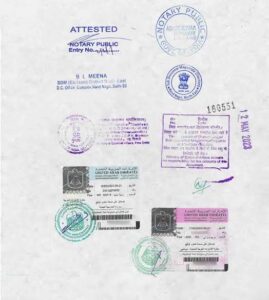
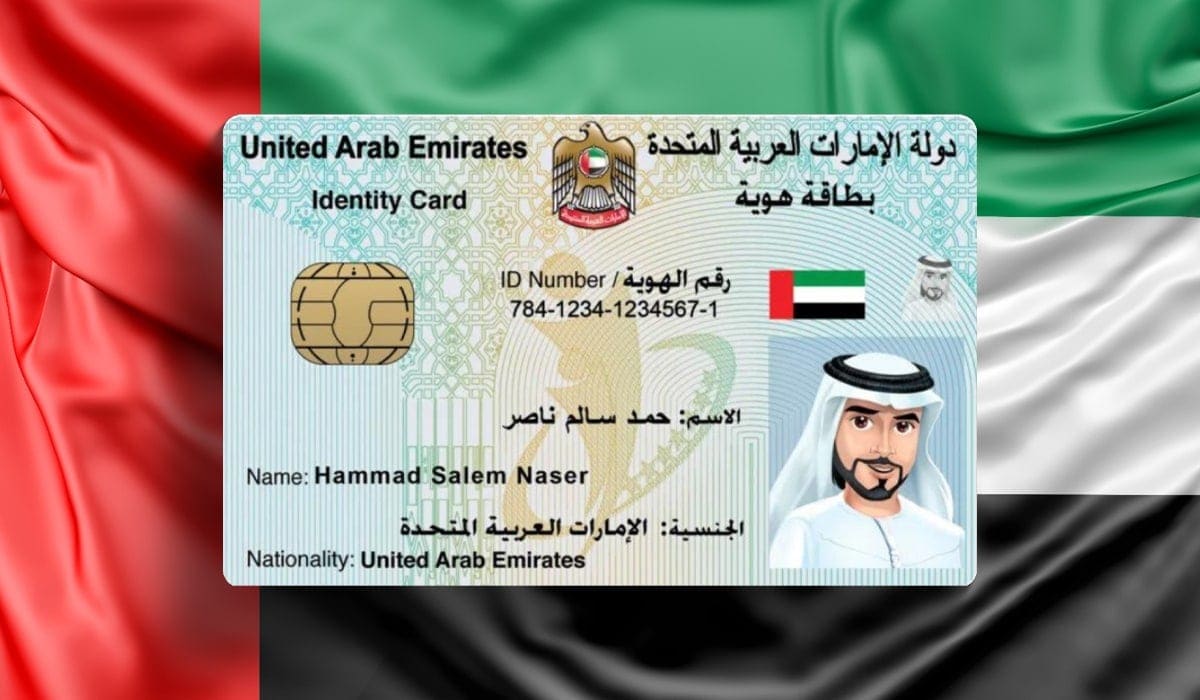
A certified proof of identity is an official identity document — such as a passport copy, Emirates ID, birth certificate, or national ID card — that has been formally authenticated by a recognized authority (a notary, embassy, consulate, or government department) to confirm it is genuine and that it belongs to the person named on it. Attestation is the specific process used in the UAE and internationally to provide that certification, giving your identity documents legal standing for use with government departments, employers, banks, and educational institutions.
If you’ve been asked to submit a “certified proof of identity” for a visa application, a bank account, a university enrollment, or a legal transaction in the UAE, this guide explains exactly what that means, which documents qualify, and how the attestation process makes them officially valid.
What Is a Certified Proof of Identity?
A certified proof of identity isn’t just a photocopy of your passport or ID — a plain copy carries no legal weight on its own. What makes it “certified” is a verification step performed by an authorized party, who confirms:
- The document is a true and accurate copy of the original.
- The original document is authentic and was issued by a legitimate authority.
- The identity details on it (name, photo, date of birth, nationality) are consistent and unaltered.
Once that verification is complete, the document is stamped, signed, or sealed by the certifying authority, turning an ordinary copy into a document that government bodies, financial institutions, and legal entities can rely on.
Which Documents Can Serve as a Certified Proof of Identity?
The most commonly requested identity documents for certification in the UAE and for use abroad include:
- Passport copies (bio-data page)
- Emirates ID
- National ID cards from your home country
- Birth certificates
- Driving licenses (in some cases)
- Voter ID or other government-issued identity cards
Which document is accepted depends on who is asking for it — a UAE free zone authority, a foreign embassy, a university, or a bank — so it’s worth confirming the exact requirement before you begin the certification process.
How Does Attestation Confirm Identity?
Attestation confirms identity by routing your document through a defined chain of verification, so that each authority in the chain checks and endorses what came before it. For a typical identity document being certified for use in or from the UAE, the chain generally looks like this:
- Notarization or first-level certification — a notary public or the issuing authority certifies the copy matches the original.
- Home country authentication — the relevant government department (such as a Ministry of Foreign Affairs) authenticates the notary’s signature and seal.
- UAE Embassy or Consulate attestation — if the document originates outside the UAE, the UAE embassy in that country attests it.
- UAE Ministry of Foreign Affairs (MOFA) attestation — the final step, confirming the document is now recognized for official use inside the UAE.
Each stamp in this chain exists to prevent forged or altered identity documents from being accepted by government systems, employers, or financial institutions — which is exactly why certified proof of identity is treated as a security requirement rather than a formality.
Why Would You Need a Certified Proof of Identity?
Common situations in the UAE that call for a certified proof of identity include:
- Applying for a UAE residence or employment visa
- Opening a personal or corporate bank account
- Enrolling in a UAE school or university
- Signing a Power of Attorney or other legal document
- Registering a company or trade license
- Completing property transactions
- Submitting KYC (Know Your Customer) documentation to a financial institution
In nearly every case, the requesting authority wants assurance that the identity document in front of them is authentic and hasn’t been tampered with — that assurance is exactly what certification and attestation provide.
Certified Proof of Identity vs. a Certified True Copy
These two terms are often used interchangeably, but there’s a useful distinction: a certified true copy confirms that a copy matches its original document, while a certified proof of identity specifically confirms that an identity document is genuine and belongs to the person presenting it. In practice, an identity document is usually certified as a true copy as part of establishing it as valid proof of identity — so the two processes typically happen together — see our certified true copy page for more on that specific service.
How to Get Your Identity Documents Certified in Dubai
If you need a certified proof of identity for use in the UAE, the process generally involves:
- Confirming exactly which document and which level of certification the requesting party needs (notarization only, full MOFA attestation, or embassy legalization).
- Preparing clear, valid copies of the original document.
- Submitting the document through the correct attestation chain — home country notarization, home country MOFA, UAE embassy (if applicable), and UAE MOFA.
- Receiving the certified, stamped document ready for submission.
Because the exact steps depend on your document type and country of origin, it’s easy to send a document through the wrong channel and lose time. This is where working with an experienced attestation service in Dubai makes the difference — we manage the entire chain on your behalf, from the first notarization to the final UAE MOFA stamp.
Frequently Asked Questions
What is a certified proof of identity?
A certified proof of identity is an identity document — such as a passport, Emirates ID, or birth certificate — that has been officially verified as genuine and accurate by a recognized authority, making it acceptable for legal, government, or financial use.
Is a photocopy of my passport a certified proof of identity?
No. A plain photocopy has no legal standing on its own. It becomes a certified proof of identity only after a notary, embassy, or government authority verifies and stamps it as a true and authentic copy.
Who can certify a proof of identity in the UAE?
Depending on the requirement, certification can be carried out by a notary public, the UAE Ministry of Foreign Affairs (MOFA), a relevant embassy or consulate, or an authorized attestation service acting on your behalf through the correct government channels.
How long does it take to get a certified proof of identity in Dubai?
Timelines vary by document type and country of origin, but most identity documents can be certified and attested within a few working days when submitted through an experienced attestation provider. Urgent processing is often available for time-sensitive visa or banking deadlines.
Do I need a certified proof of identity for a UAE visa application?
Yes, most UAE visa categories require a certified copy of your passport or national ID as part of the standard documentation, particularly for residence, employment, and family visas.
What's the difference between attestation and certification?
Certification usually refers to the first step — a notary or authority confirming a document is a true copy or that it’s genuine. Attestation is the broader, multi-step legalization process (notarization, home country authentication, embassy legalization, and UAE MOFA) that gives the document full legal recognition for official use in the UAE.
Need Help Getting Your Identity Documents Certified?
Attestation Services makes the entire certification and attestation process simple, fast, and fully compliant — so your identity documents are accepted the first time, with no delays.
Get Your Certified Proof of Identity Sorted Today
Send us your document details and we’ll walk you through the notarization, embassy, and MOFA steps — or message us directly on WhatsApp for a fast response.